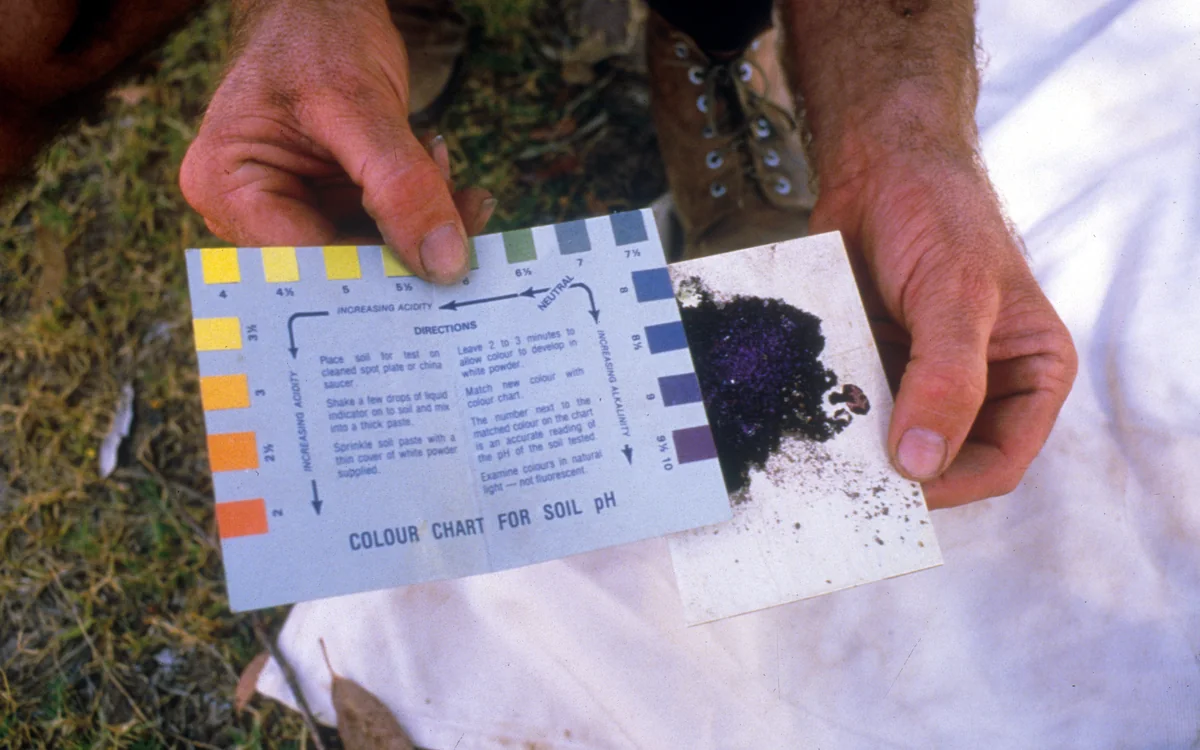
Photo licence: CC BY 3.0.
A customer may ask a visiting gardener which shrub will work in a new bed. The answer is not always a plant name. If the site is unfamiliar or the proposed plant has particular soil needs, a small pH test can prevent a recommendation based only on appearance. The useful outcome is a decision the customer can understand: plant here, choose something better suited, or investigate before buying.
This guide is about that decision during a garden visit. It is not a laboratory testing manual or a promise that one reading explains every struggling plant. The practical task is to define the patch, collect a meaningful sample, interpret the result without overclaiming and leave a record that someone can use later.
Decide whether a test will change the advice
Start with the actual planting question. A well established border with plants already growing well may not need testing simply because a kit is available. A new bed, an unexplained problem patch or a request for a plant with particular soil preferences gives the test a clearer job. This when to test distinction matters on a paid visit: the customer should know what decision the test is meant to improve.
Ask what has been added to that ground recently and which exact area the customer wants to plant. Compost, fertiliser or lime applied close to sampling can make a reading less representative of the underlying soil. The RHS warns about misleading results after recent additions. If the customer cannot say what was applied, record that uncertainty instead of quietly treating the number as settled.
Sample the bed you are advising on
Name the zone before you take out the kit: for example, “shaded bed beside the back fence”, not “the garden”. A single scoop from a convenient edge may not represent the whole space. Testing several areas where conditions differ gives a better basis for a site specific recommendation. Keep samples from visibly different beds separate rather than mixing them into a result that belongs nowhere.
Follow the sampling and mixing instructions for the kit or laboratory you are actually using. The RHS specifically advises following those directions to obtain a representative sample. Remove obvious stones and plant debris where the kit asks for it, use clean equipment, and label the sample before comparing colours. The exact method and amount are kit dependent; a remembered generic recipe is a poor substitute for its instructions.
Do not compare a freshly amended border with an untreated bed as though they were the same soil. If a second spot produces a different reading, that is information about the site, not a nuisance to average away. Retest the area where the plant will actually go, or narrow the advice to the zone you can describe confidently. A rough map or a short note can be more valuable than an extra decimal place.
Read the result as a constraint, not a diagnosis
Soil pH describes acidity or alkalinity: 7 is neutral, lower readings are acidic and higher readings are alkaline. This can matter because plants differ in the pH range in which they grow well. The measured reading helps you compare a proposed plant with that site; it does not, by itself, identify a nutrient shortage, a drainage problem or a disease.
A home pH kit answers a narrower question than a broader laboratory soil analysis. The distinction between pH and nutrient testing is worth making explicit if the customer is concerned about poor growth. Rather than recommending more fertiliser from a pH strip alone, say what the strip showed and which other causes remain open. Gardeners’ World also points out that soil texture matters alongside pH.
Read the result using the kit’s own colour scale and record the approximate range it gives. Colour matching can be uncertain, especially near a boundary. Avoid claiming a precision the method cannot support. If your proposed planting depends on a close threshold or the readings differ across the bed, take another sample or seek a fuller analysis before making an expensive promise.
Make a bounded planting recommendation
Compare the plant’s needs with the measured zone, then explain the choice in ordinary language. A practical gardener’s account of matching plants to acidic and alkaline conditions illustrates why the name of the plant matters more than treating every bed as having one ideal pH. If the customer wants an acid loving shrub in a bed that reads alkaline, discuss a more suitable plant or a different growing arrangement. Do not quietly promise that a quick amendment will make the site behave like another soil.
Conversely, a reading that looks suitable is permission to keep considering the plant, not proof it will thrive. Light, moisture, space and soil structure still belong in the decision. If the first test does not change the choice, say so. Testing has earned its place only when it clarifies the recommendation, identifies a real uncertainty or prevents an unwarranted claim.
Leave a record the customer can act on
Give the customer a short handover with five pieces of information: the named sampling zone; any recent treatment they reported; the kit or laboratory method; the reading or range; and the resulting planting choice or next check. Separate what you measured from what the customer told you. If you did not test another bed, do not describe the result as the pH of the entire garden.
For a hypothetical visit, imagine a customer asking about a new shrub border. The gardener tests two separate points in that border, finds readings that do not agree, and learns that compost was added recently. The handover might say: “Back fence border; two kit readings differed; customer reports recent compost; no final plant recommendation today; retest the intended planting spot after checking the kit guidance.” This is an illustrative note, not a real customer result or a general waiting period rule.
That record makes the next conversation shorter. The customer can see why the recommendation was held, and another visit can start with the same named patch rather than a vague memory of “acid soil”. A factual note filed with the visit may help preserve that context. The judgement remains with the gardener, not with a record keeping tool.