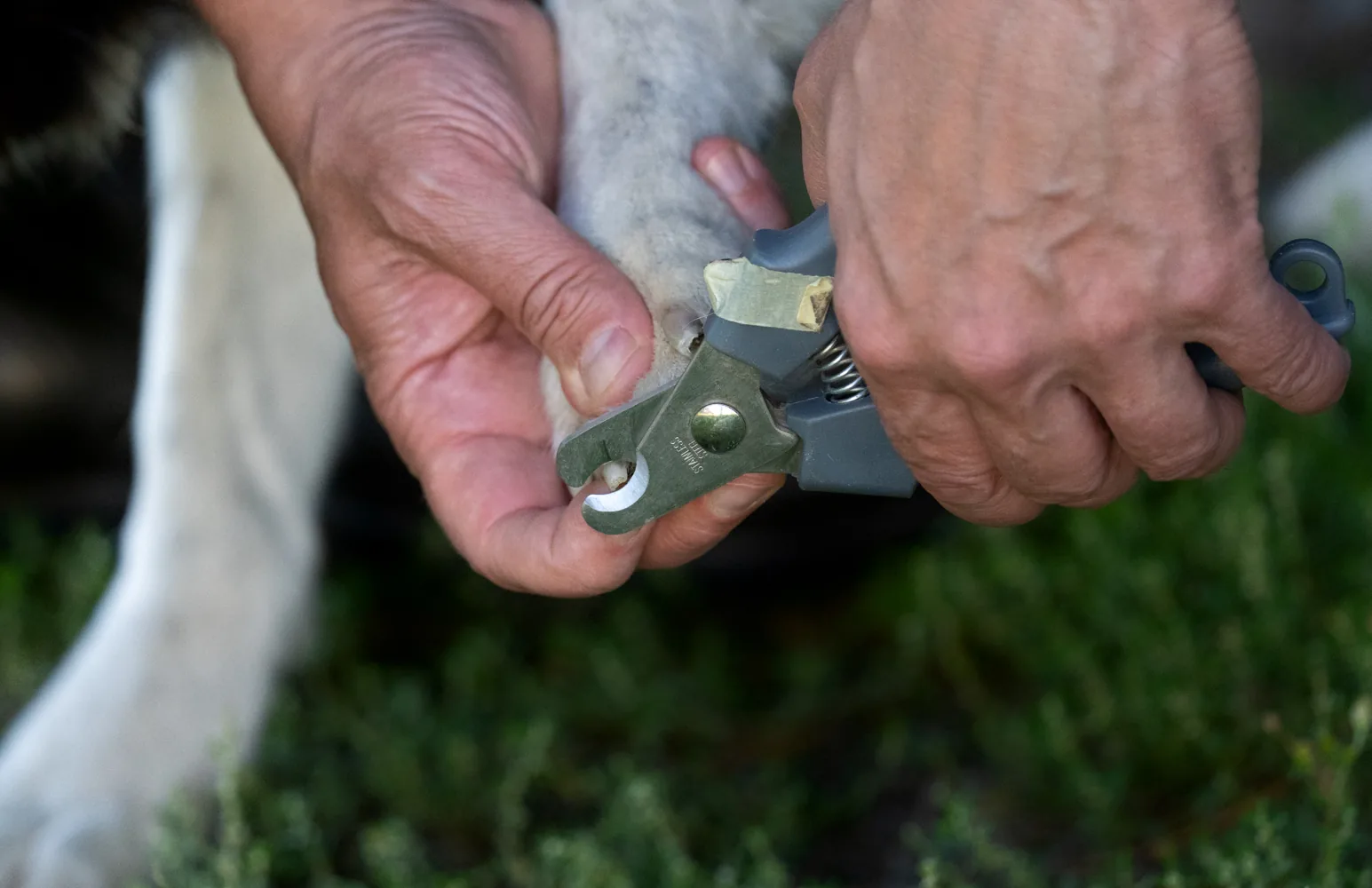
Photo licence: CC BY SA 4.0.
A nail trim can be a small part of a mobile groom until a dog pulls away, freezes or refuses further paw handling. Then the work changes. The decision is no longer how to finish every claw on schedule, but whether the dog is comfortable enough to continue and what the owner needs to know before you leave.
This is a visit and handover guide for groomers, not a veterinary diagnosis or a universal clipping technique. A worried dog, an unclear nail edge or a possible injury can each make stopping the responsible outcome. The record of an incomplete trim should be as clear as the record of a completed one.
Start with the dog, not the clippers
Ask the owner how the dog usually responds to paw handling and whether a previous nail trim caused difficulty. Look at the dog’s behaviour while the owner is present, then let the dog approach the equipment at its own pace. Begin with gradual preparation for having paws handled; that preparation may need far longer than the minutes available in one booked visit. A booking is not evidence that the dog is ready for clipping today.
Check the paw and nail in good light before proposing a cut. The quick contains blood vessels and nerves, and cutting it can cause bleeding and pain. Dark nails make the boundary harder to see. Do not turn uncertainty into a confident cut merely because the owner expects all claws to be done. If the nail or paw appears injured, ask the owner to speak to their vet rather than presenting a grooming judgement as a diagnosis.
Treat a change in behaviour as a stop signal
Watch for a dog shifting away, resisting paw contact, becoming still in an uneasy way or escalating its response. Do not wait for a snap before deciding that the process is too much. If the dog appears worried, stop and return to an easier step. Distress can include freezing, cowering or growling. Those are prompts to pause and assess, not a checklist that every dog must display.
Put the clippers down, give the dog space and tell the owner what you observed. A short break may be enough for a dog that settles and willingly accepts gentle handling again; another dog may need the trim postponed. If the dog remains stressed, stop and try another time. Do not restrain harder just to finish the appointment. Forced restraint can worsen nail care fear. A finished line on a task list is not worth making the next handling attempt harder.
Decide what can still be done safely
Separate the nails already checked or clipped from those left untouched. You may be able to complete a different, comfortable part of the booked groom, but do not quietly treat that as permission to retry the feared nail trim later in the visit. Agree any change in scope with the owner. If the dog is distressed by the whole interaction, ending the groom may be the clearer choice.
Avoid a blanket promise that every nail must be cut at once. Nail trimming can be spread over several days if a dog finds it stressful. That is useful context for a handover, not a licence to improvise a behaviour programme during a mobile appointment. For a dog that repeatedly cannot tolerate the procedure, suggest that the owner asks their vet or a suitably qualified behaviour professional for a plan. Gradual preparation and veterinary support can help with fear of nail care.
Give the owner a precise handover
Use plain factual language: which paws you handled, how many claws you clipped, what reaction made you stop, and whether you saw any bleeding or injury. Distinguish what you observed from what the owner reported. Do not write “aggressive” as a substitute for describing the actual behaviour. Do not claim a medical cause for reluctance. If a claw was nicked or bleeding continued, tell the owner promptly and direct them to veterinary advice. Cutting the quick risks pain and bleeding; that risk belongs in the owner conversation, not hidden in an internal note.
For a hypothetical visit, imagine that a dog accepts inspection of both front paws but turns away when the clippers touch the first claw. The groomer pauses, does not clip, and agrees with the owner to leave nail care for another day. The note says “front paws inspected; no nails clipped; dog withdrew paw when clippers approached; owner informed”. This is an example of useful wording, not a real customer case or a diagnosis.
Give one next step the owner can act on: a calmer gradual introduction, another appointment only after the dog is comfortable with paw handling, or veterinary advice if pain or injury is suspected. Do not force a dog that remains terrified of nail trimming. The owner should leave knowing what was not done as clearly as what was. A short visit note alongside the booking can help the next groomer avoid repeating the same failed attempt; it does not imply Offlico judges a dog’s welfare or automates this decision.