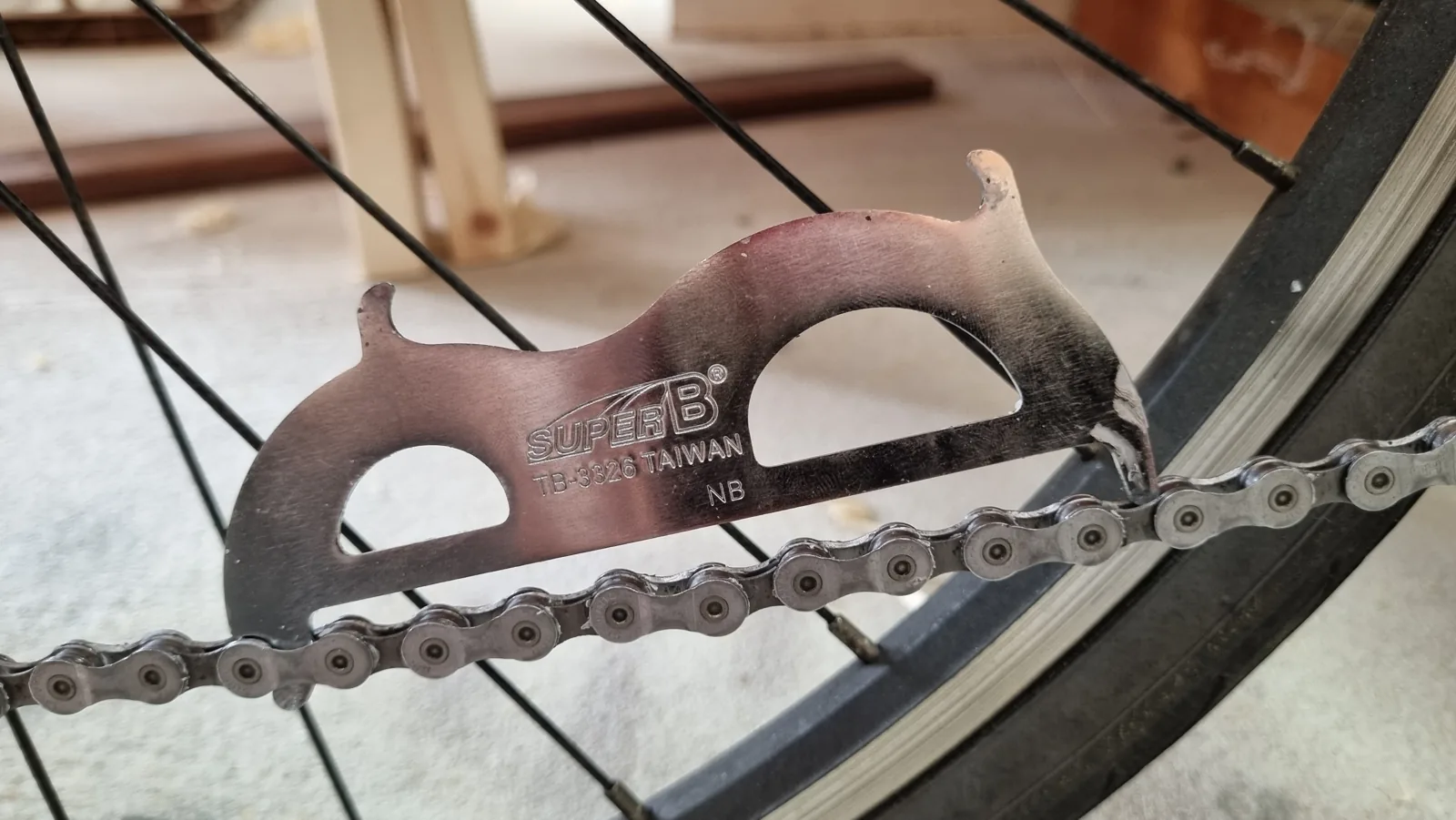
Photo licence: CC BY SA 4.0.
A customer may ask whether a noisy or tired feeling bicycle needs a new chain. The answer should begin with a check, not a guess based on mileage or appearance. On a mobile repair visit, you have to identify the drivetrain, take a defensible measurement and explain what that measurement does, and does not, tell you.
This guide is for a mechanic checking a conventional bicycle chain during a visit. It is not a universal wear limit chart. The chain, gauge and drivetrain may call for different instructions, and a chain reading alone cannot diagnose every shifting problem.
Identify the chain and the right measuring tool
First establish the drivetrain and chain model as far as the bike and the customer’s records allow. Do not assume a gauge that suits one chain gives the same answer on every other chain. The Park Tool repair guide distinguishes its chain checker methods and flags chains with unusual roller sizes. That is a useful warning before treating the number stamped on a tool as a universal instruction.
Look at the whole transmission, not only the chain. Ask what the rider has noticed: skipping under load, reluctant shifts, noise after cleaning, or simply a routine check. Record the symptom as the customer reports it, then inspect it separately. BikeRadar explains how worn rollers can make shifting less precise, but a poor shift is not by itself a wear measurement. Check the chain’s condition and the bike’s setup before presenting replacement as the only possible repair.
Take a reading you can repeat
Use the checker according to its own instructions. Place it on a suitable section of chain, seat it as directed and avoid pushing a drop in gauge into place to manufacture a result. Cyclist describes the basic drop in check between chain rollers, while Park Tool specifies how to hold tension for its CC 4.2 method. The mechanics differ, which is why the tool’s instructions matter more than a memorised gesture.
Move the gauge and repeat the check in more than one part of the chain. BikeRadar specifically advises measuring in multiple places because wear may not be even. If a reading changes markedly around the loop, record that rather than quietly choosing the most convenient result. Clean enough to see the chain and use the tool properly, but do not confuse visible dirt with the measured wear itself. If the checker cannot be used confidently on this chain, say the result is inconclusive and choose a compatible method. Ask the customer before moving the bicycle or running it through the gears, and make space so the wheel and chain can be checked without dragging tools across their property.
Keep the reading separate from the decision
A chain checker gives a measurement under a stated method, not an automatic instruction to sell a replacement. Published guides do not all give the same blanket threshold. BikeRadar varies its advice by drivetrain speed, while road.cc quotes manufacturers explaining why mileage alone cannot decide replacement. Escape Collective discusses how modern chain and measuring tool designs complicate a simple reading. Record the uncertainty instead of picking whichever figure makes the recommendation easiest.
Use the relevant chain and checker manufacturer instructions, then consider the condition of the sprockets and the customer’s symptoms. If you cannot identify the chain or confirm the tool’s compatibility, do not state a precise replacement threshold as fact. You can still explain what you observed and propose a follow up measurement. A customer should be able to tell whether you are recommending an immediate chain change, monitoring, or a wider drivetrain inspection, and why.
Agree the scope before changing parts
If replacement is indicated, explain the proposed part and what else you need to inspect. Park Tool links excessive chain wear with poor meshing and premature cog wear; Cyclist explains the practical reason to check before the drivetrain needs broader replacement. Neither means that every worn chain automatically needs a new cassette. The condition of the actual bike decides the scope. State any uncertainty before ordering or fitting additional parts.
For a hypothetical visit, suppose the gauge gives a consistent result that reaches the applicable chain maker’s limit, while the customer also reports skipping under load. The next step is to explain the measured chain wear and inspect the rest of the drivetrain before promising a chain only fix. This is an illustration, not a real customer case or a diagnosis from a photo. If the correct chain is unavailable, agree whether the bike should wait for the right part rather than improvising a substitute. If you do fit a chain, check its routing and joining method against its instructions, then verify shifting before calling the visit finished. A fitted part is not the same thing as a completed repair.
Leave a useful record for the next visit
Show the customer the gauge and describe the result in ordinary language: which chain and tool you checked, whether the reading was consistent, what limit you relied on, and what action you agreed. Avoid saying simply “chain stretched” as though that explains the mechanism. Park Tool describes internal rivet and roller wear as the source of the apparent stretch. A short explanation is enough; the customer does not need a workshop lecture to understand the recommendation.
Keep a factual visit note with the bicycle and drivetrain identification, checker or method, reading or inconclusive result, symptoms reported, parts inspected, work authorised and next step. This is a sensible handover practice, not a claim that Offlico measures chains or makes mechanical decisions. If no replacement was made, tell the customer what to watch for and when another check would be worthwhile under the relevant maker guidance. If further parts were discussed but not approved, separate that suggestion from the work actually completed. A later mechanic should be able to see what happened without repeating the entire conversation.