Photo licence: CC BY SA 3.0.
A customer books a mobile puncture repair because the bicycle cannot be ridden, but “flat tyre” is not a complete diagnosis. The visit can involve a simple tube puncture, a damaged tyre or a different wheel setup altogether. The useful job is to identify the cause, agree what can be repaired on site, then leave a wheel that has actually been checked.
This guide is for a mobile mechanic planning and handing over a customer visit. It is not a shortcut around the bicycle maker’s instructions or a promise that every damaged tyre can be saved. Keep the repair choice tied to the wheel in front of you.
Confirm the setup before travelling
Ask which wheel is flat, whether the bicycle uses an inner tube or a tubeless setup, and whether the customer knows the tyre size. A photo of the tyre sidewall and valve can help you prepare, but it is not a substitute for seeing the wheel. Ask whether the customer has already fitted a spare tube or used sealant, so you do not arrive expecting an untouched puncture.
Pack for diagnosis as well as replacement. The Halfords puncture guide lists tyre levers, a pump, a tube or patch kit and the tools needed to remove the wheel. Cyclescheme also treats a spare tube, levers and pump as a practical starting kit. Bring suitable options for the booked bicycle rather than assuming one tube or valve will fit every wheel. If the setup is uncertain, tell the customer that the repair scope and parts will be confirmed on arrival.
Find the cause before fitting a new tube
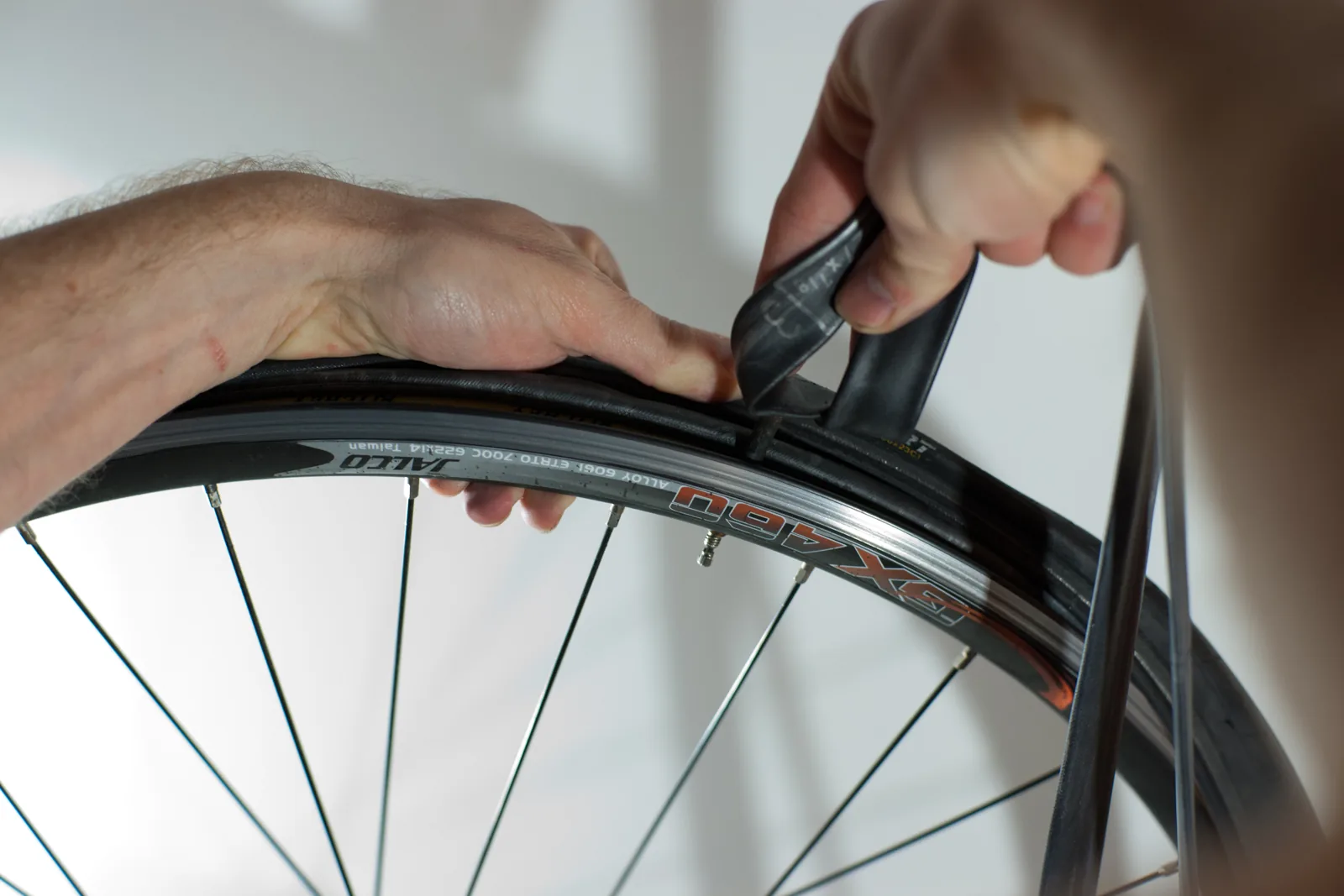
Look over the tyre tread and sidewalls before taking the wheel apart. Note a visible cut, protruding object or heavily worn casing. For a tubed wheel, remove the tube carefully and locate the hole. Compare its position with the tyre and rim, then inspect the corresponding part of the casing for anything still sharp. Cycling UK advises checking right around the tread and the inside of the casing, even after one likely cause has been found.
A quick replacement without that search can leave the original thorn or glass in place. Work methodically around the wheel rather than poking blindly into the tyre. If the hole is hard to find, the repair instructions describe inflating the tube and looking for escaping air or bubbles in water. Dry the tube before using a patch method that requires a clean surface. Make the finding part of the customer explanation, not just an invisible bench step. Compare the mark on the tube with the tyre before discarding either part. A hole facing the tread calls for a different search from damage near the valve or rim. If the evidence does not point to a single cause, say that rather than naming a culprit you cannot see. Note the uncertainty so a repeat leak can be investigated intelligently.
Choose the repair that fits the damage
A small hole in a sound inner tube may be suitable for a patch; a compatible replacement tube may be the clearer choice when the old one is badly damaged or the visit needs a dependable immediate result. Check the patch kit’s own instructions rather than mixing methods. Park Tool distinguishes a pre glued patch as a temporary trailside fix from a more durable vulcanising patch. Cyclescheme likewise distinguishes self adhesive and glue on kits. Tell the customer which option you used and why.
Do not treat a damaged tyre casing as though it were only a tube puncture. Park Tool describes a tyre boot as a temporary measure for a ripped casing, not a permanent repair. Schwalbe says a tyre should be replaced when the protection layer or carcass threads show through the tread. If the tyre cannot safely hold the tube or the right replacement is unavailable, explain the limitation and arrange the next step instead of presenting an improvised fix as finished work.
Keep tubeless work separate
If the wheel is tubeless, do not follow the inner tube patch sequence by habit. The Park Tool inner tube guide explicitly excludes tubeless tyre bodies and points to a plug method for that setup. Confirm what sealant or earlier repair is present, inspect the tyre and rim, then use the appropriate product instructions and your own competence to decide whether a plug, a replacement tyre or another approach is suitable.
The customer may have booked “puncture repair” without knowing the difference. Explain the setup and the implication before charging ahead. If the damage is beyond the tools or parts carried to the visit, say so clearly. A rescheduled repair with the correct tyre is a better handover than a vague claim that a leaking tubeless wheel has been fixed.
Check the wheel before handover
After fitting a tube, check that it is not caught under the tyre bead. Inflate in stages and look around both sides of the rim for an even bead line. Cycling UK recommends checking bead seating and spinning the wheel to see that the tread runs reasonably straight. Refit the wheel using the bicycle’s correct fastening and brake procedure, and check the wheel is secure before returning the bicycle.
Finally, explain what was found, what part was repaired or replaced and what still needs attention. A useful hypothetical handover is: “The rear tube had a small hole and I removed a thorn from the tyre. I fitted a new tube, checked the tyre seating and inflation, and the casing showed no visible cut. Please get back to me if it loses air again.” Label any separate tyre wear or uncertain cause honestly. Record the parts used and the decision made, so a return visit starts with the actual repair history rather than a fresh guess. If the customer was expecting a patch but the tyre needed replacement, set out that changed scope before fitting parts. Keep the note short: wheel, setup, cause found, repair, checks and any remaining concern. That also gives the customer a clear account of why the visit differed from the original booking.