What this searcher actually needs
The practical search query this article answers is booking app for massage therapist UK. Nearby searches include online booking system for massage therapist, massage therapist booking form, mobile massage booking app, and massage appointment reminders.
The problem is not only taking bookings online. A massage therapist needs each request to arrive with enough context to decide whether the appointment is safe, profitable, reachable, and clear for the client.
That matters commercially for Offlico because this is a high intent workflow search. The therapist is looking for software that can reduce messages, protect treatment time, and stop the booking calendar from creating operational problems.
A calendar slot is not a booking
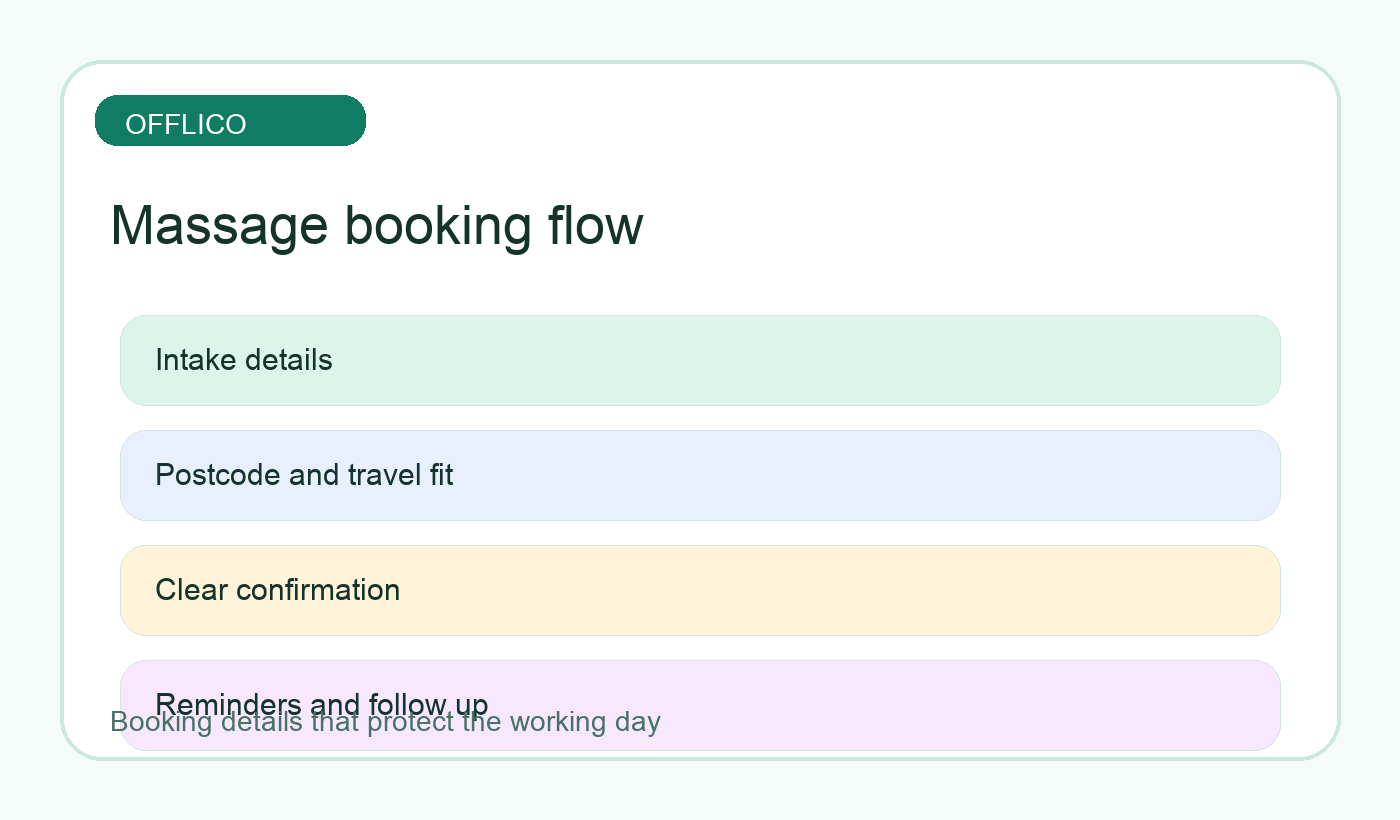
A slot picker can make the calendar look tidy while hiding the real work. For massage therapy, the appointment still needs treatment type, duration, location, preparation notes, contraindication signals, and a clear way to change or cancel.
The GOV.UK form structure guidance is a useful reminder to ask questions only when they serve a clear purpose. Every booking field should help the therapist accept, prepare, route, confirm, or follow up.
| Weak booking app | Useful booking app |
|---|---|
| Shows open slots | Checks whether the treatment fits the slot |
| Collects name and phone only | Collects treatment, address, access, and preparation context |
| Accepts any area | Flags postcode and travel fit |
| Sends generic confirmation | Uses the real appointment details in confirmation and reminders |
Intake without heavy forms
The form should feel simple to the client while collecting details that avoid back and forth. A mobile or clinic based therapist usually needs just enough information to know what is being booked and whether anything needs review before confirmation.
W3C label guidance, WebAIM accessible forms, and GOV.UK message guidance point to the same practical rule: make labels specific, keep the path understandable, and explain what happens next.
Fields that usually matter
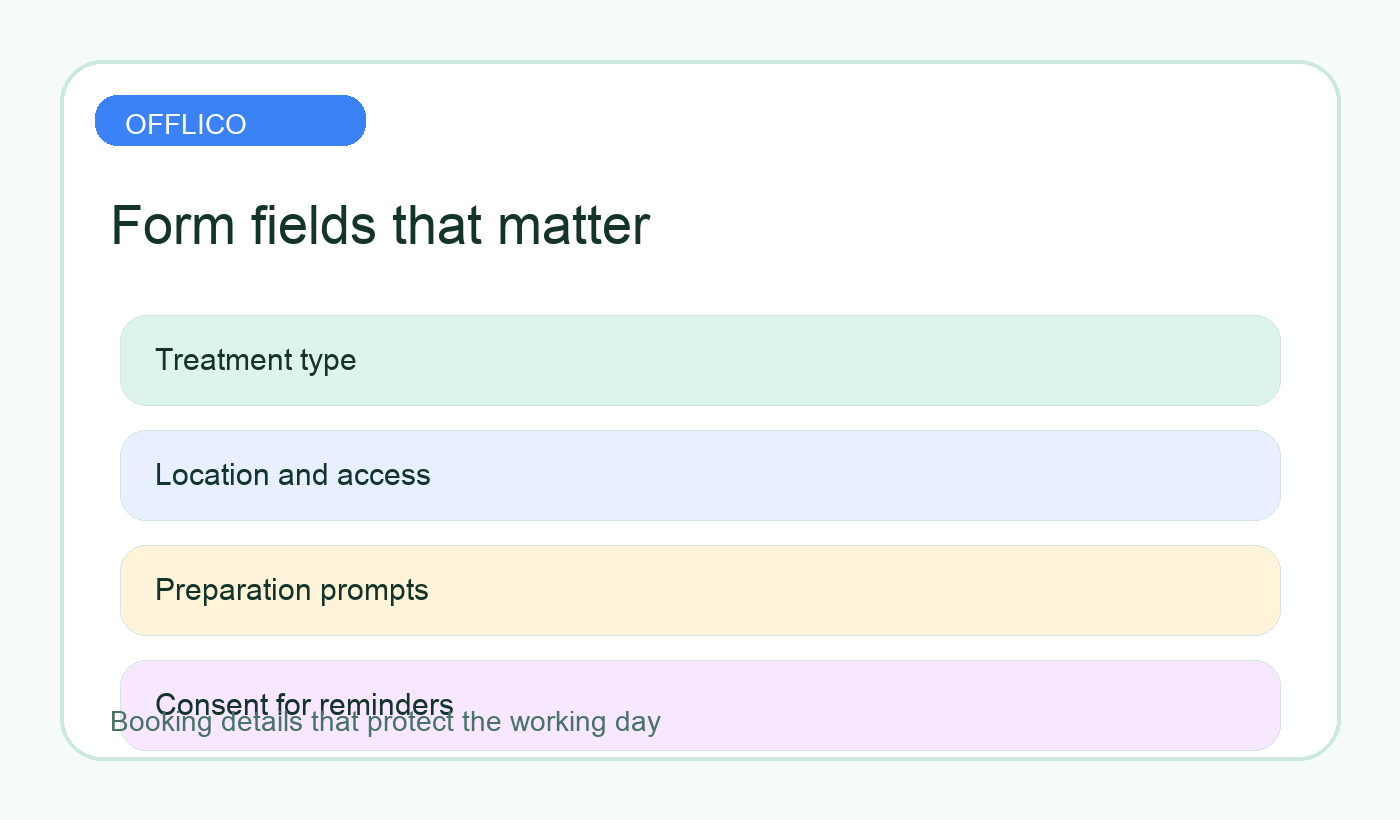
- treatment type and duration
- preferred date and time
- clinic, home visit, or workplace setting
- postcode and address for mobile work
- access notes and parking context
- preparation notes and review prompts
- clear consent for operational reminders
Protect travel and boundaries
Mobile massage bookings can break the day if the app accepts slots without geography. A therapist may have enough time on paper, but not enough travel buffer, parking confidence, or area control to deliver the appointment calmly.
This is where online booking overlaps with smart routing. The booking flow should collect the postcode early, avoid impossible gaps, and leave manual review in place for requests that need judgement.
| Signal | Why it matters |
|---|---|
| Postcode | Stops bookings outside the working radius |
| Treatment duration | Prevents short slots hiding long appointments |
| Travel buffer | Protects the day from impossible gaps |
| Access notes | Reduces arrival delays and preparation surprises |
| Manual review rule | Catches requests needing safety, price, or route judgement |
Confirm remind and handle changes
The booking is not safe until the client understands the status. The app should distinguish requested, held, confirmed, waiting for review, and waiting for payment, then use those details in confirmation and reminder messages.
Appointment tools and references from Square Appointments, Acuity intake forms, Calendly routing forms, and Twilio appointment reminders show why forms, reminders, and automation need to be judged together.
A useful confirmation should include
- appointment status
- treatment, date, time, and location
- preparation or access notes
- deposit or payment expectation when relevant
- how to reschedule or cancel
- which reminders the client should expect
Where Offlico fits
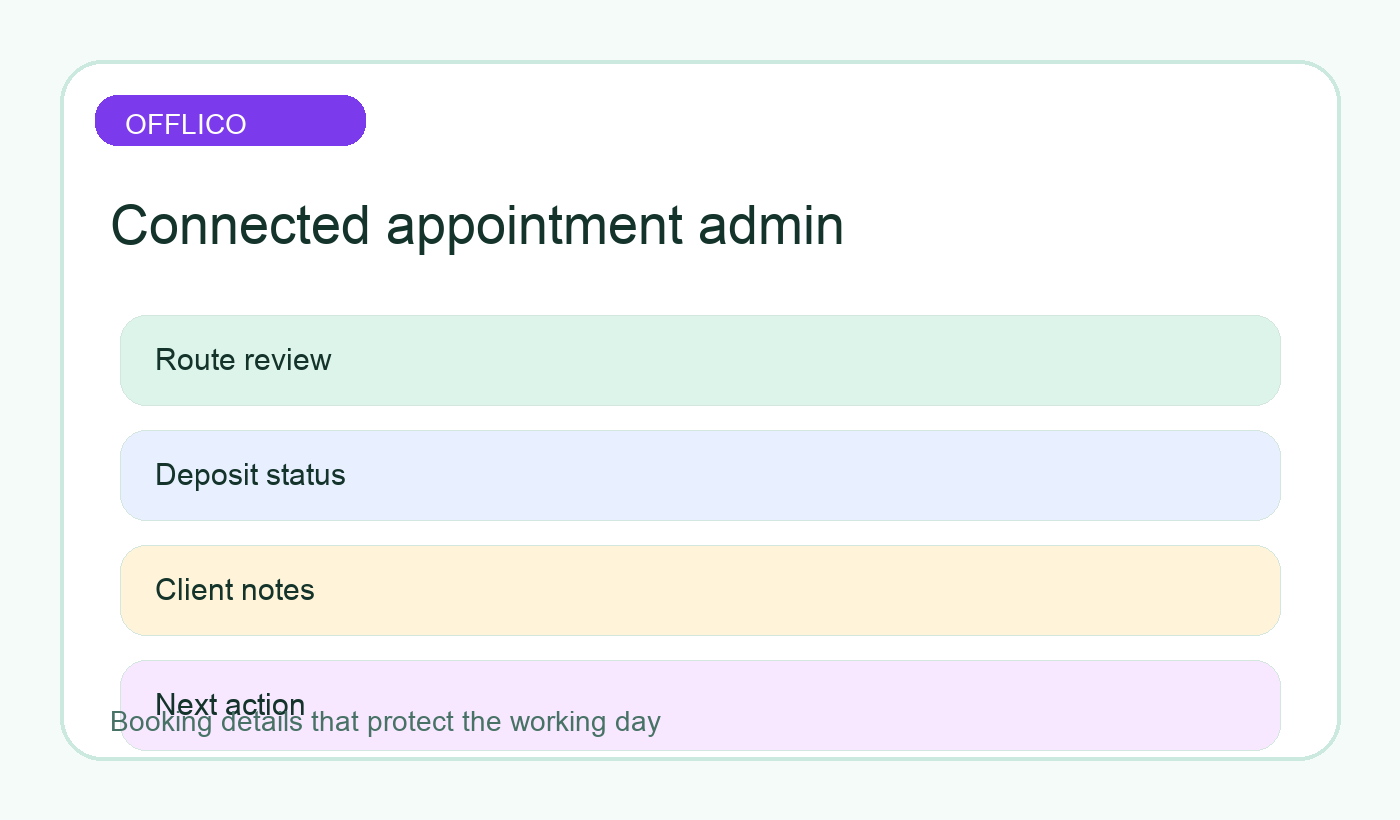
Offlico fits when a massage booking is treated as part of the operating workflow, not a separate calendar widget. The request should feed the same system that holds appointment details, route pressure, client context, reminders, payment state, and follow up tasks.
That matters because unclear bookings create work twice. The client has already tried to book, but the therapist still has to chase details, judge travel, explain preparation, send reminders, and remember payment follow up. A connected booking workflow protects paid treatment time.
Final takeaway
A booking app for massage therapists should do more than publish availability. It should collect the right intake details, protect postcode and travel fit, confirm clearly, send useful reminders, and keep payment or follow up context near the appointment.
Start with the practical question behind the search: does this app make each massage appointment easier to deliver, or does it just move client messages into another inbox?
What should a booking app for massage therapists include?
It should include treatment choice, duration, client contact details, location or access fields, preparation notes, confirmation status, reminder settings, and a clear route into client records and follow up admin.
Is a booking app enough for mobile massage work?
Only if it handles more than the calendar. Mobile massage work also needs postcode checks, travel buffers, manual review rules, and reminders that use the actual appointment details.
Should massage therapists use intake forms in online booking?
Yes, but keep them purposeful. Ask for details that affect safety, preparation, location, duration, payment, or whether the appointment needs review before confirmation.