Do sole traders need a business bank account
The short answer is no: sole traders and ordinary partnerships are not legally required to have a business bank account. That does not mean every personal current account can be used for trading, or that mixing money is the easiest way to work.
The practical decision has three parts. Check what the law requires, check what your bank permits, then decide whether a separate account will make your own records clearer. The UK Government's business banking guidance explains the legal position and the value of separating finances, while HMRC's record keeping guidance sets out the records a sole trader must keep.
This guide is for sole traders, not limited companies. A limited company is legally separate from its owner, so its money should not be treated as the owner's personal money. If you are a sole trader, the choice is more flexible, but the bookkeeping consequences are still real.

The legal answer and the account terms are different
The absence of a legal requirement is only the first check. Some personal current accounts do not allow business transactions, so check your provider's terms before using one for work. HSBC's guide to business accounts for sole traders makes the same distinction between the law and account terms, and the practical guidance from Bytestart explains why permission to use a personal account matters.
Read the current terms for your exact account, not a general assumption about the bank. A provider may distinguish an occasional sale from regular customer payments, cash deposits or a trading name. If the account is unsuitable, ask what account type covers your actual activity before routing more payments through it.
Your tax duty remains separate from that product choice: you must still keep records of business income and expenses for Self Assessment. The government's overview of setting up as a sole trader links registration, records and tax responsibilities without making a particular bank account your bookkeeping system.
What separating the money changes
For many sole traders, the main advantage is not prestige or access to a branded card. It is a cleaner starting point for the books. Government guidance says that separating personal and business finances makes accounting simpler. Independent bookkeeping guidance from Sage also recommends keeping business and personal transactions distinct.
When customer receipts enter one account and normal business costs leave the same account, the statement becomes a useful control list. You can compare it with invoices, card processor reports, cash records and receipts. Transfers to yourself can be labelled as drawings rather than being confused with an expense.
A separate account does not create tax relief. Whether a cost is allowable depends on the nature and purpose of the expense, not the card used. The government's guidance on allowable self employed expenses gives the categories and conditions. The account simply makes the evidence easier to assemble.
When a permitted personal account may still work
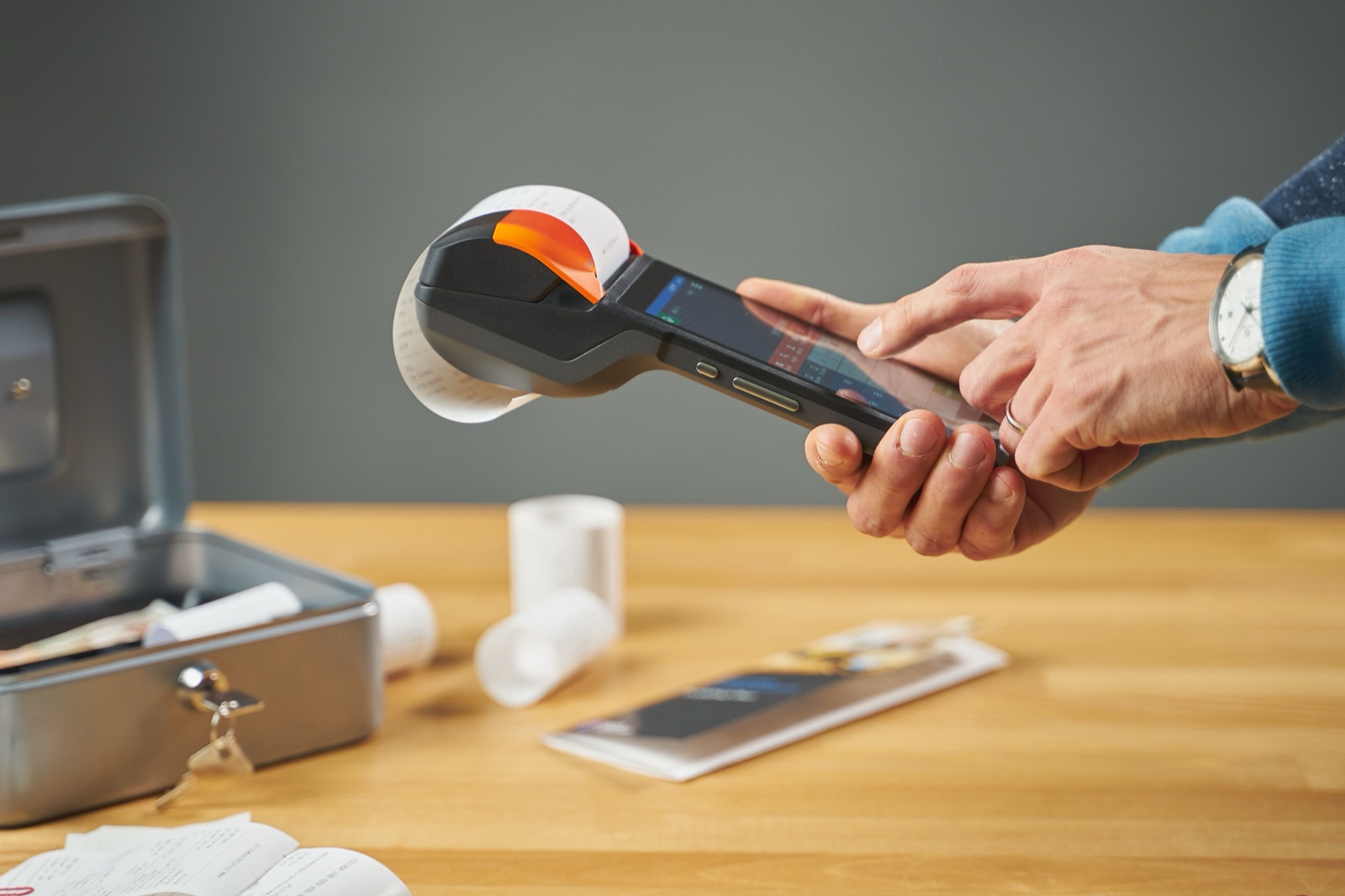
A permitted personal account can be workable when the business is very small, the number of transactions is low and the owner records each item promptly. For example, a newly self employed consultant receiving two bank transfers a month and paying a handful of software bills may be able to identify everything without much friction.
That example is hypothetical, not a recommendation. Complexity can increase quickly when the business takes deposits, refunds customers, uses a card reader, handles cash, pays subcontractors or receives money through several platforms. A courier's payment routes can look very different from a consultant's, which is why a courier specific account guide focuses on payment methods and operating needs.
If you keep a mixed account, use a repeatable method. QuickFile's sole trader bookkeeping guide describes filtering personal entries from an imported mixed statement. In other words, a mixed statement still has to be filtered line by line so the business entries can be identified. Count that review time as a real cost of the arrangement.
- The bank's current terms explicitly permit the activity.
- Every customer receipt can be matched to an invoice, booking or sales record.
- Every claimed cost has a receipt and a short business explanation.
- Personal items can be excluded reliably at each review.
- The process still works at the busiest point of the year.
How to compare sole trader business accounts
Start with the payment flow, not the introductory offer. Business accounts can carry monthly, annual or transaction charges, and the cheapest option on one pattern may be expensive on another. The Co operative Bank's sole trader overview identifies common account features and considerations, while Finder's comparison explains how UK self employed business accounts differ.
Map a normal month before comparing. How many incoming transfers, card settlements and supplier payments occur? Is cash deposited? Are international transfers needed? Does another person need controlled access? Do you need statement exports for an accountant? Then compare cash handling, transfer limits, exports, integrations, support and eligibility against the way you actually get paid.
Published features and fees can change, so verify them on the provider's current pages. NatWest's business account range shows why eligibility and service details need a current check, and its explanation of reasons for opening a business account separates practical benefits from legal obligation.
- Payment fit: transfers, cards, cash, cheques and overseas receipts.
- True cost: monthly fee plus charges for the transactions you actually make.
- Record access: clear statements, exports and a usable history.
- Control: notifications, payment approvals and card management where needed.
- Support and resilience: how urgent access or payment problems are handled.
A simple weekly money routine
A separate account only helps when it is reviewed. Choose a short weekly slot and work from the bank feed or statement. Match incoming money to invoices or sales records. Match outgoing money to receipts, supplier invoices or mileage and travel evidence. Add a note when the business purpose is not obvious.
For card takings, remember that a settlement may combine several sales and deduct fees before reaching the bank. Keep the processor report so the gross sales, fees and net deposit can be reconciled. For cash, keep a cash record and record any amount deposited or retained for business use.
Practical guidance from Sage explains consistent bookkeeping for sole traders, and Holloway Davies explains the practical case for separate business banking. The useful habit is to resolve unclear items while the job is still easy to remember.

A bank statement is evidence, not the whole set of books
It is tempting to treat a tidy statement as finished bookkeeping. That leaves important gaps. A separate account does not replace bookkeeping, receipts or the context behind each transaction. A statement may show a retailer and an amount, but not what was bought, why it was for the business or whether part of the purchase was personal.
Keep the source document and the business explanation. Maintain invoices and sales records even when the matching payment is obvious. If money moves between accounts, label the transfer so it is not mistaken for income or an expense. Prime Accountants' discussion of mixed spending explains the record problems created by blurred transactions, and Angel Accounting gives practical reasons to separate business and personal finances.
The same principle applies if you use cash basis accounting. HMRC's cash basis guidance explains how income and expenses are generally recorded when money is received or paid, but the underlying evidence still matters.
Handle drawings and accidental personal spending clearly
As a sole trader, money you move to yourself is normally described in the records as drawings. It is not a wage paid by a separate employer. A regular transfer with a clear reference can make personal cash flow easier to plan and keep the business statement readable.
If you accidentally use the business card for a personal purchase, do not hide or relabel it as a business cost. Mark it as personal or drawings according to the bookkeeping method, retain enough detail to explain it and reimburse the business if that is your chosen routine. Guidance from Prime Accountants explains why personal and business spending should stay identifiable alongside your accountant's advice can help keep the treatment consistent.
Likewise, if you pay a business cost personally, record the expense and how it was funded rather than waiting for it to appear in the business account. The goal is a complete business record, not a statement with no exceptions.
How to move to a separate account without losing the trail
Choose a cutover date and write it down. Direct new invoices and booking confirmations to the new payment details from that date. Update card processor settlements, payment links and recurring client instructions. Then move business direct debits and standing orders one by one, checking each supplier after the next payment.
Keep the old account accessible until outstanding customer payments, refunds and delayed card settlements have cleared. Download statements in a durable format and preserve the records for the period they cover. Bytestart's separate account guide describes the operational benefits for a sole trader, while the government's record keeping page explains how long tax records normally need to be retained.
Tell customers only through normal trusted channels and verify that templates, website details and invoices all agree. Treat any unexpected request to redirect a payment cautiously. Finally, reconcile both accounts across the cutover period so no income or cost disappears between them.
- Open and test the new account before announcing it.
- Set a dated cutover and update invoice and booking templates.
- Move card settlements, subscriptions and supplier payments.
- Watch both accounts for late receipts and refunds.
- Download old statements and reconcile the overlap.
- Close or repurpose the old arrangement only after the trail is complete.
Keep the account connected to the work
The bank entry is easiest to understand when it can be traced back to the client, job, invoice, receipt or journey that created it. That is particularly useful for mobile and appointment based businesses, where the operator may take a deposit today, complete the work later and incur travel or materials costs around it.
Offlico's current bookkeeping view keeps income, expenses, receipts and mileage close to the work. The bookkeeping feature overview shows the current income, expense, receipt and mileage workflow. You can also review the invoicing workflow for connecting customer charges and payment records and the client management features for keeping the customer context with the job.
No software choice changes the legal test for an expense or removes the need for accurate records. The practical aim is simpler: reduce the number of unexplained transactions and keep the evidence near the operational event.
A practical decision rule
If the personal account forbids business use, the decision is straightforward: choose a suitable permitted account. If it permits the activity, compare the time and risk of filtering mixed money with the full cost and features of a separate account. Revisit the decision when transaction volume, payment methods, staff access or accountant needs change.
The strongest arrangement is the one you can operate consistently. Customer money should be easy to trace, business costs should have evidence, personal drawings should be obvious and the records should still make sense months later. A separate business account often helps deliver that clarity, but only the routine around it makes the clarity last.
Is a business bank account compulsory for a UK sole trader
Generally no. Sole traders are not legally required to have a business bank account, but a personal account's terms may prohibit business transactions, so check the exact terms.
Can I use a second personal account for sole trader income
Only if the provider permits that business use. Even then, compare the account terms, protections, service and record keeping workflow with a suitable business account.
Does a business bank account replace bookkeeping
No. You still need records of income and expenses, source documents such as receipts and enough context to explain each transaction.
What should I compare before opening an account
Compare fees and transaction charges, payment types, cash handling, transfer limits, exports, integrations, support, access controls and eligibility against the way your business works.
Final takeaway
A sole trader business account is usually a practical choice rather than a general legal requirement. Start with your provider's terms, then judge whether separating the money will save review time and produce a cleaner trail.
Whichever account you choose, keep invoices, receipts and explanations, reconcile the activity regularly and review the arrangement as the business changes. The account is the route taken by the money. Your records explain what the money meant.