Start with the timing question
Cash basis and traditional accounting answer the same question in different ways: when should a sole trader count income and expenses? The choice sounds technical, but it becomes very practical when a customer pays after 5 April, a supplier bill remains unpaid, or the business needs accounts that show more than the cash currently in the bank.
For eligible UK sole traders, cash basis is now the standard way to record business income and expenses. Traditional accounting, also called accruals accounting, remains available when it gives a more useful view of the business. This guide explains the difference without pretending one method is always better.

This is general information for UK sole traders, not personal tax or accounting advice. If the business has unusual losses, finance needs, stock, several trades or a planned change of method, ask a qualified accountant or tax adviser to check the position.
Cash basis and traditional accounting in plain English
Under cash basis, income normally enters the records when the business actually receives the money, and an expense enters when the business actually pays it. The current cash basis recording rules say not to count money that is still owed by a customer, and to count only expenses that have actually been paid.
Under traditional accounting, income and expenses are recorded by the date the business invoiced the customer or was billed by the supplier. The current official overview makes that timing distinction directly. Professional guidance on the 2024/25 cash basis changes also explains that cash basis became the default tax accounting method for unincorporated businesses, while a business that wants accruals has to opt out.
The difference is not simply paper versus software. Both methods need reliable records. The difference is what those records are being used to calculate at the tax year end.
- Cash basis: focus on money received and money paid.
- Traditional accounting: focus on income earned and costs incurred, even when payment has not moved yet.
- Both methods: keep invoices, receipts, bills, bank evidence and clear categories so the figures can be explained.
One job, two possible tax years
Hypothetical example: a mobile service business completes a £900 job on 28 March and issues the invoice that day. The customer pays on 18 April. The dates cross the 5 April tax year end.
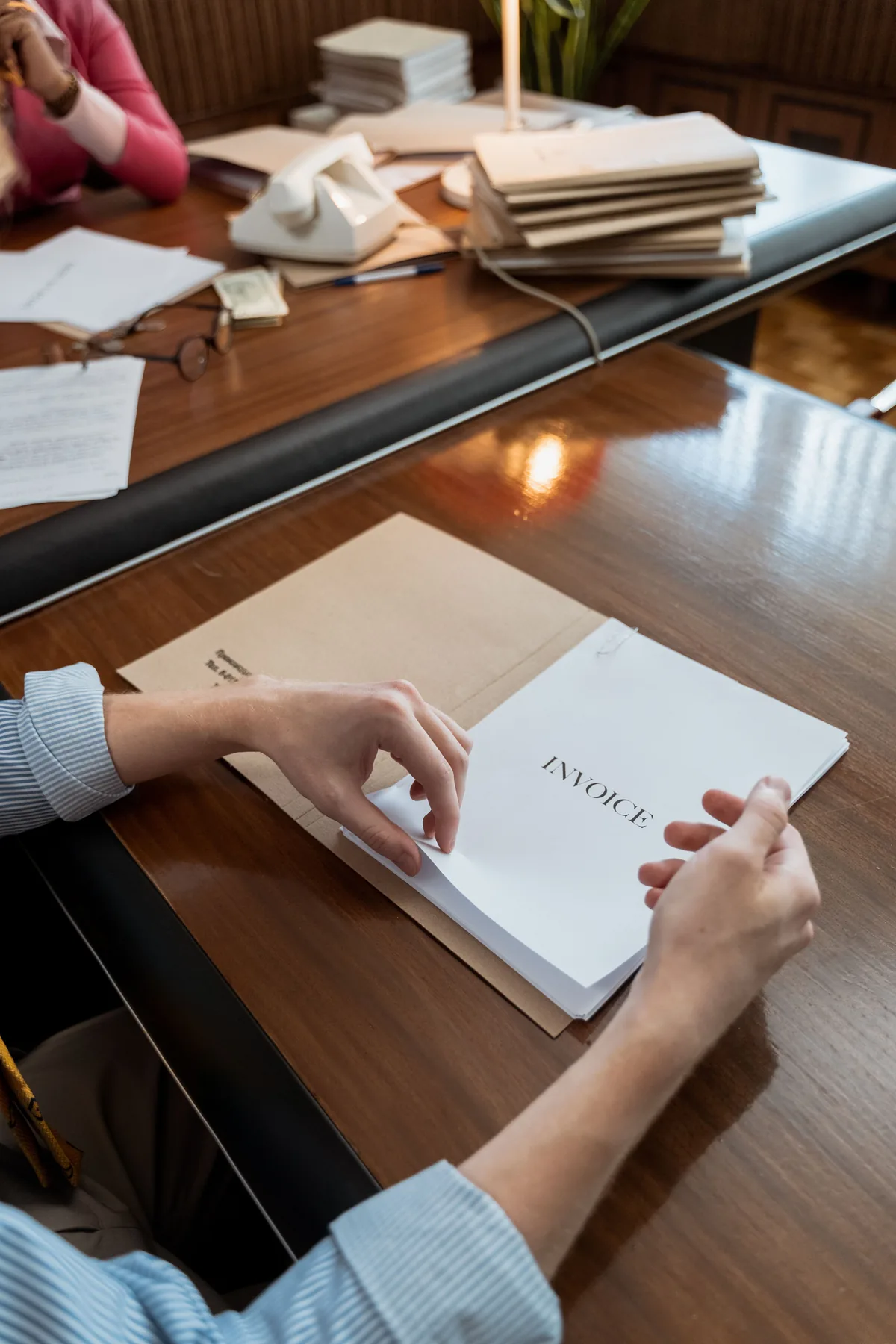
Now reverse the example. Suppose a supplier sends a bill in March and the business pays it in April. Cash basis normally counts the expense in April when it is paid. Traditional accounting normally recognises it in the earlier period when it was incurred. The method moves both sides of the ledger, not only sales.
What changes in day to day bookkeeping
The most useful comparison is not which method sounds simpler. It is which dates, outstanding amounts and decisions the owner needs the records to support.
When cash basis may fit better
Cash basis can be a sensible fit when the operation is straightforward, customers usually pay quickly, supplier bills are paid promptly and the owner mainly needs clear tax records rather than formal management accounts.
Start with the payment trail
each sale has a clear received date, each cost has a clear paid date, and refunds are linked back to the original transaction.
Keep the method consistent
choose one sensible way to decide when money is received or paid and apply it the same way on each return.
Track invoices anyway
cash basis changes tax timing, but it does not remove the need to chase unpaid customers or plan for bills.
Look beyond the bank balance
money in the account is not automatically profit, because future costs, refunds and tax still matter.
A practical explanation of the money movement approach describes why the method can reduce reporting friction for many sole traders. A separate profit guide is useful for keeping turnover, allowable expenses and profit as different figures.
When traditional accounting may be more useful
Traditional accounting can be worth the extra records when unpaid invoices and bills are material, the business holds significant stock, the owner wants a clearer measure of performance, or a lender asks for accounts showing what the business is owed and owes.
- Customers often pay weeks or months after the work.
- Supplier credit means bills regularly remain unpaid at year end.
- Deposits or work spanning several periods make cash movement a poor guide to activity.
- Stock levels make purchases and sales difficult to understand from bank entries alone.
- The owner needs management accounts for planning, finance or a future sale.
The point is not that traditional accounting is more professional. It is that it answers more questions about financial position. Practical method choice guidance treats that wider purpose as part of the decision. A separate consumer finance comparison also highlights the need to plan for receivables, payables and transition work, rather than choosing by simplicity alone.
Check whether cash basis is available
Cash basis is available to sole traders and partnerships without corporate partners, but it is not available to every business. The current eligibility and exclusion list includes limited companies, limited liability partnerships, partnerships with corporate partners and several specialist businesses or elections.
Do not use an old turnover threshold from an archived blog as the deciding rule. The 2024/25 reforms removed the previous turnover limits for eligible unincorporated businesses. Current eligibility guidance for small businesses and a practical explanation of receivables, payables and the excluded list can help frame the questions, but the current GOV.UK page should lead the factual check.
If one person runs more than one business, the official rules say the choice can be made separately for each business. That makes it even more important to label records clearly and avoid mixing income or expenses between trades.
Switching methods needs a transition check
A sole trader can choose traditional accounting instead of cash basis and reports that choice on the Self Assessment return. Switching is not just changing a setting. Adjustments may be needed so income or expenses are not counted twice or missed altogether.
Professional guidance warns that moving between the methods can require transitional adjustments. This is one of the clearest points at which individual advice is worthwhile, especially when unpaid invoices, unpaid bills, stock, equipment or losses are material.
Freeze the old method
record the final position at the change date, including unpaid sales and costs.
Identify items not yet counted
list anything that would otherwise disappear between methods.
Identify items already counted
prevent the same income or expense entering both methods.
Document the adjustment
keep the working and the reason with the return records.
Get advice where the amounts matter
a short professional review can be cheaper than correcting a return later.
Keep records that support either method

A cash basis business still needs more than a bank statement. It should be possible to follow a sale from invoice to payment, explain a platform deduction or refund, and show why a receipt belongs to the business. A practical guide to following income through the full payment trail is useful here.
Traditional accounting needs the same foundation plus a reliable view of what remains owed at the year end. A bookkeeper's example shows why supplier bill date and payment date both matter. Broader Self Assessment guidance also stresses the value of records that prove the figures, not just totals typed into a return.
- Sales invoice date and invoice number.
- Date and amount actually received.
- Customer and job reference.
- Supplier bill date and due date.
- Date and amount actually paid.
- Receipt, bill or other supporting document.
- Refund, fee or deduction linked to the original transaction.
- Outstanding status at the tax year end.
- Consistent category and a note for unusual items.
Keep the workflow simple enough to maintain every week. A clear comparison of what each method records is more useful when those dates and documents already exist in the same record trail.
A practical decision checklist
Answer these questions before choosing or changing the method. The aim is to make the trade off visible, not to score one method as the automatic winner.
Is the business eligible for cash basis?
Check the current official exclusion list first.
How much is usually unpaid at year end?
Large receivables or payables make the wider accruals picture more useful.
Does the business hold significant stock?
If yes, traditional accounting may explain performance more clearly.
Are accounts needed for finance or planning?
Ask what format the lender, adviser or buyer expects.
Can the owner keep both invoice dates and payment dates?
Those fields protect either method and make a future switch easier.
Would a switch create a material adjustment?
If yes, get tailored advice before filing.
For many small service businesses, the answer will be cash basis because the operation and payment trail are simple. For others, traditional accounting is worth the extra work because the owner needs a more complete picture of what has been earned, what is owed and what remains to be paid.
Keep the bookkeeping trail close to the work
The accounting method is a tax and reporting choice. The everyday record problem is the same under both methods: keep the appointment, invoice, receipt, payment and follow up trail clear enough to explain later.
Offlico's bookkeeping workspace helps mobile service businesses keep invoices, payments and records closer to the client work they came from. It does not choose an accounting method or replace professional advice, but it can make the underlying record trail easier to review.
Final takeaway
Cash basis records money when it is received or paid. Traditional accounting records income when earned and costs when incurred. That one difference changes where unpaid invoices and bills sit at the tax year end, how much year end adjustment work is needed and how complete a picture the accounts provide.
Start with eligibility, then look at payment delays, unpaid bills, stock, finance needs and the purpose of the accounts. Keep both invoice dates and payment dates even if the current method only uses one for tax timing. Better records preserve the choice and make professional advice more useful.